
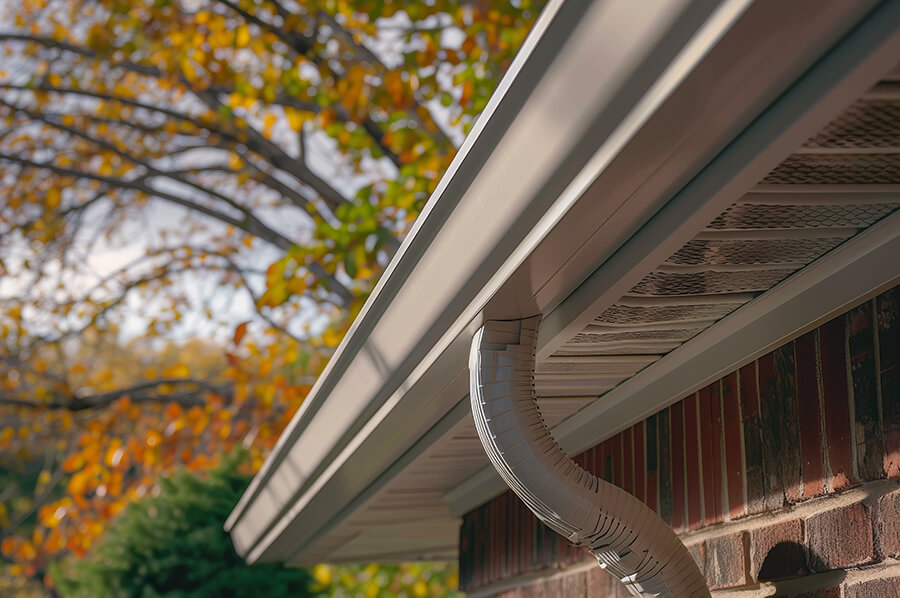
Rainwater spilling over the edge of a roof can cause more damage than a few muddy spots around the house. Poor drainage allows water to soak into the soil near the foundation, stain exterior walls, and damage wooden trim. A properly installed gutter system helps control where that water goes before these problems become expensive repairs.
Why Does Rainwater Keep Overflowing the Roof Edge?
Roof runoff moves faster than many homeowners expect, especially during heavy storms. A large roof section can send hundreds of gallons of water toward the gutters in a short period. If the gutters are too narrow, clogged, or poorly positioned, water spills over instead of reaching the downspouts. This overflow often appears near roof valleys, where two slopes meet and concentrate runoff into one area.
Gutter capacity also depends on the roof’s pitch and the number of downspouts. Steeper roofs shed water quickly, leaving less time for gutters to collect it. Professional rain gutter installation considers these conditions before selecting gutter sizes and drainage locations. Simply replacing old gutters with the same dimensions may leave the original problem unresolved.
Getting the Gutter Slope Right Makes a Big Difference
Water needs a slight downward path to reach each downspout. Gutters that sit too level allow puddles to collect, while excessive slope can create uneven gaps along the roofline. Installers typically use a gradual pitch of about 1/4 inch for every 10 feet, although the correct slope depends on the gutter layout and manufacturer specifications. Proper gutter installation also requires secure hangers, correctly positioned outlets, and enough support to prevent sagging under heavy rain.
Incorrect placement creates another concern. Gutters mounted too low may allow runoff to overshoot the front edge, particularly on steep roofs. A professional gutter company checks how water leaves the shingles and enters the gutter channel. These adjustments help prevent water from flowing behind the gutters and damaging fascia boards.
Downspouts Need to Carry Water Away From the Foundation
Collecting rainwater along the roofline solves only half the drainage problem. Downspouts must release that water somewhere safe. Outlets that empty beside foundation walls can saturate nearby soil, increase basement moisture, or contribute to erosion around the property. Extensions, splash blocks, and underground drainage pipes can move runoff farther from the house, provided they discharge into an appropriate location. Homeowners searching for gutter companies near me should ask how installers determine downspout locations, especially on properties with sloped yards or limited drainage space.
Fixing the Hidden Problems Behind Leaking Gutters
A leaking gutter does not always need complete replacement. Loose end caps, failing sealant, separated joints, and damaged outlet connections can allow water to escape. Aluminum gutters also expand and contract as temperatures change, which can gradually weaken poorly sealed connections. Repairs may solve isolated leaks, but widespread corrosion or repeated joint failures can make replacement more practical.
Another overlooked issue involves the fascia behind the gutter. If the wood has softened from years of moisture exposure, new hangers may not hold securely. Contractors should inspect the mounting surface before attaching new sections. Homeowners comparing gutter installation near me services can ask whether estimates include fascia inspections, hanger spacing, and repairs needed before installation. Skipping these checks can leave a new system attached to a weak surface.
Matching the Gutter System to the Roof and Local Weather
Gutter size, material, and layout should reflect how much water the roof collects. Standard five-inch K-style gutters work for many homes, while larger six-inch systems can handle greater flow in suitable layouts. Seamless aluminum gutters also reduce the number of joints where leaks might develop. However, even oversized gutters can overflow if downspouts are undersized or blocked. A rain gutter installation near me search should lead homeowners to contractors who evaluate roof area, rainfall intensity, and drainage routes rather than recommending one system for every property.
Professional Installation Helps Prevent Repeat Drainage Problems
A complete drainage assessment can reveal whether overflow comes from incorrect gutter sizing, poor slope, damaged fascia, or inadequate downspout placement. Apollo Roofing serves homeowners with gutter installation, replacement, and repair services. Homeowners dealing with recurring roof runoff problems can contact Apollo Roofing to have their existing system inspected and discuss improvements that direct rainwater away from vulnerable areas of the home.