
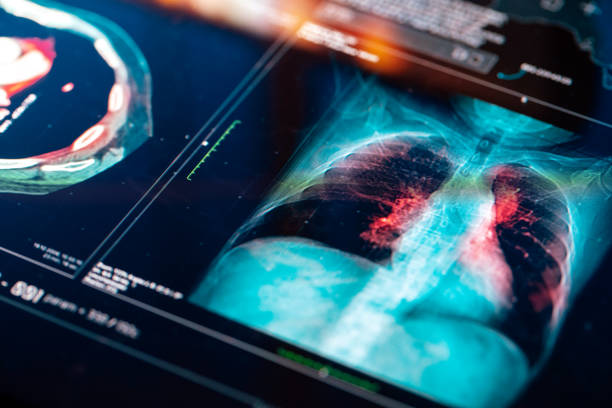
Over the last decade, the imaging landscape has undergone one of the most significant transformations in history: from manual, analog processes to highly automated, AI-supported digital ecosystems. This shift isn’t simply about trading film for pixels; it restructures the entire radiology workflow to drive increased efficiency, diagnostic accuracy, and system interoperability. As healthcare networks scaled across regions, standardized digital imaging pipelines became critical, and industries continued to accelerate the journey.
From Film-Based Limitations to Digital Precision
Traditional analog workflows relied on film cassettes, manual handling, and chemical processing. These steps introduced delays, inconsistencies, and higher operational costs. With digital radiography, there are no longer processing bottlenecks or film artifacts to contend with; instead, this modality provides radiology departments with constant image quality and reduced exposure dose, thanks to automated post-processing features that eliminate many of the variables inherent in analog imaging.
A major factor in this evolution is the design of modern X-ray machines; these now incorporate smart sensors, automated alignment features, and advanced image acquisition logic. These systems are engineered not only for faster throughput but also for reproducibility, an essential requirement for high-volume diagnostic centers.
The Rise of Detector Technology and Next-Gen Imaging Hardware
In this regard, detector innovation has become key to going digital. Duraline panels represent a quantum leap in reliability, durability, and energy efficiency. Constructed for challenging clinical environments, these panels offer superior image stability, can capture the signal faster, and allow advanced exposure algorithms. Their robust design also reduces downtime, which means it is the perfect fit for imaging departments in high utilization conditions.
This increase in clarity and contrast is further enhanced by the integration of AI algorithms into acquisition software, alongside advances in detectors. Automated noise reduction, edge enhancement, and dose-optimization enable technologists to focus more on positioning and less on manual post-processing adjustments.
AI and Workflow Automation: The New Digital Backbone
AI in imaging has moved beyond simple enhancement filters to now include:
- Automated quality control flags
- Positioning guidance
- AI triage for critical findings
- Intelligent routing within PACS and RIS
These capabilities reduce retakes, optimize radiation dosage, and help radiologists prioritize high-acuity cases. AI-enhanced acquisition will provide clinicians with faster turnaround times and more consistent image outputs, which are key to improving patient throughput and department efficiency.
Interoperability and Integration of Clouds
Fully digital imaging also requires seamless communication among devices and platforms. Cloud-enabled workflows have eliminated many of the constraints of physical data storage, enabling remote reporting, mobile diagnostic units, and cross-site collaboration. As hospitals transition to multi-location operations, cloud imaging ensures radiologists can access diagnostic-quality images anywhere, anytime.
The journey from analog to a fully digital, AI-driven workflow is about much more than modernizing equipment-it’s about creating an intelligent imaging ecosystem where data flows effortlessly, systems communicate automatically, and clinicians work with greater certainty and speed.