
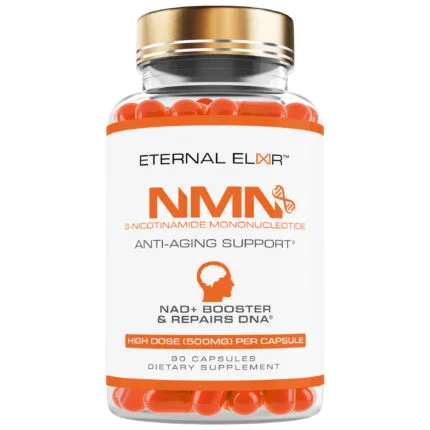
Two NAD+ bottles can look almost identical on a shelf yet differ sharply in what you pay and take each day. One publisher’s own price table, dated September 2026, lists daily costs from about $0.66 to $2.28, with pack size and capsules per serve driving much of the gap. Bottle price and front-label numbers rarely reveal that, so the serve instructions and small print matter more.
This guide uses a five-check method: identify the precursor and its milligrams per serve, convert price to cost per day, count capsules per serve, note any label limits, and confirm where the product ships from. Prices change, so treat figures here as snapshots.
Bottle Price Misleads: Do the Daily-Serve Maths
Bottle price tells you almost nothing until you divide it by the number of daily serves. Take a 30-capsule bottle at $42.49 and a 90-capsule bottle at $59.99. If each serve is one capsule, the smaller bottle works out to about $1.42 a day and the larger to about $0.67. The cheaper-looking bottle costs roughly double per day.
Capsules per serve can change the result again. If a product needs two capsules to reach the headline dose, the 30-capsule bottle lasts 15 days, not 30, and the same $42.49 becomes about $2.83 a day. A 90-capsule bottle at two per serve lasts 45 days, or about $1.33 a day. Always read the directions, not just the front of the pack. Some labels give a range, such as one to two capsules, so decide which serve you would actually take before you calculate.
Price comparisons for any NAD supplements in Australia shoppers consider work best when converted to cost per daily serve. That page lists per-day costs from roughly $0.66 to $2.28, but it is a publisher’s own table, priced as of September 2026, and the publisher sells some of the products listed. Use it as a starting point and check current prices yourself.
NMN or NR: What Human Trials Do and Don’t Support
Two precursors dominate the labels: nicotinamide mononucleotide (NMN) and nicotinamide riboside (NR). Both have human trials behind them, but it helps to be precise about what those trials were designed to show.
The publisher of the price table cited earlier lists trials using 250-900mg of NMN or 100-2,000mg of NR a day. That is a wide spread, and the figures come from a citation list rather than the papers themselves, so check the primary studies before treating any number as a target. The cited work includes a randomised, placebo-controlled NMN trial in healthy middle-aged adults (Yi et al., GeroScience, 2023) and a recent systematic review and meta-analysis of oral NMN safety and metabolism-related outcomes (Yang et al., Nutrients). On the NR side, Martens et al. (Nature Communications, 2018) reported that chronic supplementation was well tolerated and raised NAD+ in healthy middle-aged and older adults, and Conze et al. (Scientific Reports, 2019) examined long-term safety in healthy overweight adults.
The pattern is consistent: these studies concern tolerability and NAD+ levels in generally healthy people. They do not show that raising NAD+ slows ageing, extends lifespan or delivers a clinical benefit you would notice. Nor do they tell you which precursor or dose suits you. When a label or listing implies otherwise, treat it as marketing, not trial evidence.
Reading Pharmacy-Shelf Listings Critically
Pharmacy listings add a second price to untangle: the recommended retail price (RRP) and the current sale price. A sale price tells you what you pay today, but the RRP is only a reference point and says nothing about dose or value. Always run the daily-serve maths on the price you would actually pay at checkout.
Take one listing as an example. A source table priced in September 2026 shows Bioglan NMN 500 at Chemist Warehouse for $42.49 against an RRP of $84.99. At the sale price, one 500mg capsule per serve across 30 capsules works out to roughly $1.42 a day. At the RRP, it would be about $2.83. The “discount” is real, yet the product still costs more per day than the larger packs in the same table. Sale prices change, so confirm the figure on the day you buy.
Then check the label limits. Some pharmacy NMN products state a maximum of 12 weeks of use, which affects how you plan a purchase and whether a multi-bottle stockpile makes sense. Readers searching for NAC 600 and NAD+ by Chemist Warehouse listings should check the precursor, dose per serve and label limits on each product. That linked page is published by a seller of some of the products it lists, and it does not review NAC 600 products, so treat it as a price reference only.
Stack Questions to Settle Before You Buy
Combination products add a layer of confusion. NMN and NR are NAD+ precursors. NAC is a different ingredient with a different purpose, and the evidence in this article covers only the precursors. Nothing here shows that NAC and NAD+ precursors work together, so a product that bundles them should be judged ingredient by ingredient, not as one “stack.”
Anyone researching the best NAC and NAD+ supplement in Australia options should first define their goal, then run each ingredient through the same label checks: milligrams per serve, capsules per serve, label limits and cost per day. That page doesn’t address NAC combinations, so use it for price context only.
Before buying, write down questions for a GP or pharmacist:
- Do any of my medicines or existing conditions make a new supplement unsuitable?
- Is a 12-week label limit, where one appears, something I should plan around?
- If a serve is two capsules, is that the dose I’d actually be taking?
- Are the extra ingredients in this product ones I need, or only ones I’m paying for?
- How would we judge whether the product is worth continuing?
Take the label and a screenshot of the price with you. Specific numbers make the conversation more useful than a brand name alone.
Conclusion
Bottle price and brand names tell you little, while the label tells you a lot. Before buying, check the precursor (NMN or NR), the milligrams per serve, the capsules per serve and any label limit, such as 12 weeks on some pharmacy products. Then divide the price by the days the bottle will actually last. This keeps the trial evidence in proportion too, since it speaks to tolerability and NAD+ elevation rather than broad longevity promises. Prices, stock and labels change, so confirm current details first, and run your shortlist past a GP or pharmacist.